
Losing weight is not as easy as adding some extra kilograms to your weight. And when it comes to your four-legged companion, it’s equally tough. A healthy weight can significantly contribute to your pet’s energy levels, mobility and vitality. But the question is, what is the safest approach? Well, a gradual, consistent and vet-guided approach is the one you should follow. Remember, with the right balance of diet and exercise, you can slim down your pets while reducing the risk of weight-related problems.
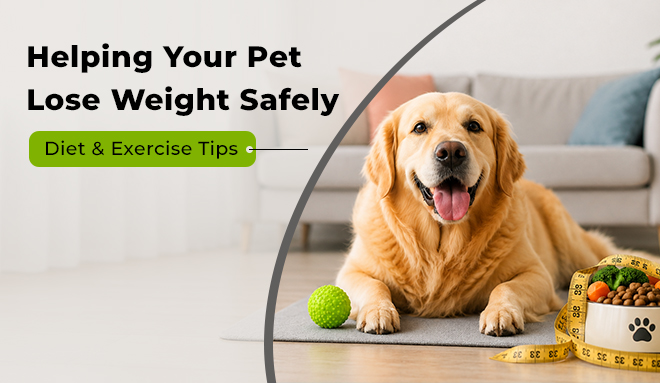
In this blog, we will cover some effective diet and exercise tips to help your pet lose weight healthily.
Why does maintaining a healthy weight matter?
Maintaining a healthy weight is essential, as extra weight can put stress on your pet’s joints, cause chronic inflammation and affect the health of the heart and other vital organs. Lower fat levels also help stop insulin resistance, reducing the risk of diabetes. Healthy pets typically live longer compared to overweight pets.
Easy yet effective diet & exercise tips
Here are some easy and effective tips to help you lose your pet’s weight:
Check with your vet first
Before starting a weight-loss plan, schedule a veterinary visit. Your vet can confirm whether your pet is overweight and help you set a safe target weight without cutting calories too aggressively.
Control portions carefully
One of the common causes of weight gain in pets is feeding them too much. Use a measuring cup for meals, feed scheduled portions instead of free-feeding and adjust amounts based on your vet’s advice rather than guesswork.
Reduce treats and table scraps
Treats can quietly add unnecessary calories, so keep them limited and purposeful. If your pet loves snacks, swap some high-calorie treats for healthier options such as small pieces of carrot or a few green beans, as long as your vet says they’re appropriate for your pet.
Choose a weight-management diet
Some pets do better on a veterinary-recommended weight-control food because it’s designed to be lower in calories while still providing balanced nutrition. Your vet may also suggest reducing portions rather than switching brands right away.
Increase exercise gradually
Exercise helps burn calories and supports lean muscle mass. However, you should not let your overweight pet jump into intense activity too quickly. Start with short walks or light play sessions, then increase duration or pace gradually.
Make exercise fun
Consider fetch, puzzle feeders, food-dispensing toys, or short play sessions throughout the day to keep your pet active. Making exercise a fun activity can help your pet stay consistent with it.
Track progress regularly
Weigh your pet regularly and watch for gradual changes over time. Safe weight loss is usually slow and steady, so if the progress is too fast or too slow, your vet can help modify the plan.
Final Thoughts
Healthy weight loss can be simply achieved with portion control, healthier food choices, more movement, and regular check-ins with your vet. With patience and consistency, you can help your pet reach a healthier weight safely and sustainably. Never put a pet on a crash diet or make sudden, drastic food cuts. If your pet seems weak, overly hungry, or uninterested in activity, contact your veterinarian immediately.